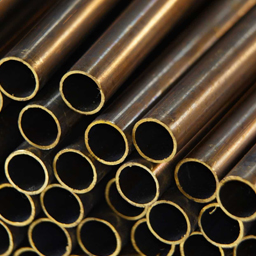
In modern infrastructure and manufacturing, brass tubing plays a vital role in fluid transfer systems, condenser units, and architectural structures. Whether used alongside stainless steel bars, pipes, plates, or coils in integrated engineering projects, Brass Tubes offer consistent mechanical properties and dimensional accuracy. Krygen Metalloys ensures stringent quality control, precise tolerance adherence, and surface finish excellence to meet global industrial requirements.
Brass Tubes are hollow cylindrical sections manufactured from copper and zinc alloys. The typical composition varies depending on the grade, but standard brass alloys contain a balanced percentage of copper for corrosion resistance and zinc for strength and hardness. Certain grades may include small additions of lead to improve machinability or tin to enhance resistance to dezincification in aggressive environments. Metallurgically, brass exhibits excellent thermal conductivity, electrical conductivity, and malleability. This makes Brass Tubes ideal for heat exchangers, condenser coils, and refrigeration systems where efficient heat transfer is essential. The material maintains good tensile strength while remaining easy to bend, flare, or expand during fabrication processes. Its smooth internal surface promotes efficient fluid flow, reducing friction losses in piping systems.
Brass tubing also demonstrates good resistance to atmospheric corrosion, freshwater exposure, and mild chemical environments. When properly specified and installed, it delivers long service life in both indoor and outdoor applications. Its compatibility with various joining methods, including soldering, brazing, and mechanical fittings, further enhances its adaptability in engineering systems.
One of the key advantages of Brass Tubes is their optimal balance between strength and ductility. They withstand internal pressure and mechanical stress without cracking, which is essential for fluid transfer and pressure equipment applications. Their inherent corrosion resistance helps prevent rust formation and surface degradation, ensuring reliability in plumbing, marine, and industrial processing environments.